By the author of How to Prep When You’re Broke and The Tower
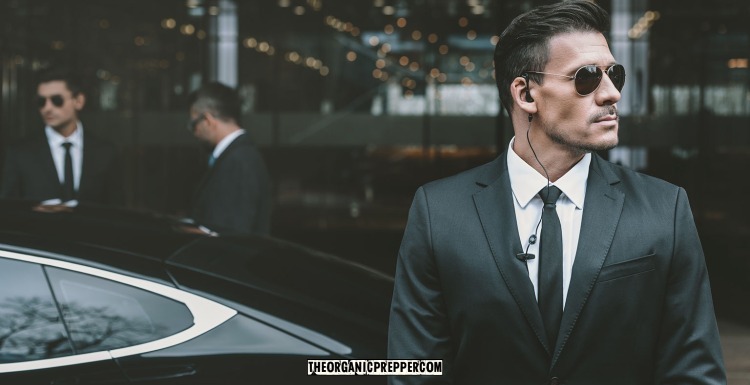
Have you ever wondered how personal protection experts can manage to watch a big crowd to keep a high-profile individual safe from the one person in the crowd who wants to do them harm? I recently had the opportunity to conduct a fascinating interview and learn some of the secrets of a professional bodyguard.
I recently met Drew, who has been working in the personal security sector at a high level for several years. Formerly a member of the US military, he has undergone rigorous training to be able to identify those who pose a threat to the person whom he is protecting and to work with a team to keep them safe.
While we certainly can’t all afford our own private security teams, there’s a lot we can learn from a guy who does this kind of work full-time.
Why do we need to learn from of a professional bodyguard?
The world has gotten a lot crazier over the past decade and tensions have grown. There are a variety of reasons for this:
- Political strife
- Potential terrorism
- Medical freedom
- Racial tension
- Extremist philosophies
People from every possible facet of life are angry, and angry people are dangerous. Add a crowd dynamic and mob mentality to that anger and you don’t have to be a high-profile figure to become a target. Remember the lady who was having dinner at a sidewalk cafe and faced the ire of a group of people who wanted her to pledge obeisance to their political cause?
If everyday people can easily become targets, you can imagine how dangerous it is to be a public figure or celebrity. But the tides have turned to the extent that now, we can all benefit from learning the secrets of a professional bodyguard. Drew and I spoke for a few hours about the following topics, and I’ve turned our discussion into an article that I hope you’ll find informative. Any mistakes in conveying the information are completely mine.
What are the visual cues that indicate someone is potentially violent?
In the study of violence dynamics, there are certain visual cues that indicate a person is considering or planning an aggressive action in a one-on-one situation. Most of these cues are completely unconscious but knowing what they are can help you in two ways. First, it can give you an early warning that the person confronting you may attack. Secondly, it can help you to prevent giving out these hints yourself. Out of all of the things on the list, I know I’m personally guilty of the weapons check if I’m in a situation in which I feel like I might need to defend myself.
This information is a combination gleaned from my interview with Drew, the book Facing Violence by Rory Miller, and a violence de-escalation course I took with Dr. Tammy McCracken of 500Rising. Note that people who are more comfortable and familiar with violence are less likely to display these traits.
- Distance checking: An aggressor will often reach out and touch someone on the shoulder or chest before becoming violent as an unconscious distance check to make certain the person is within reach of a blow.
- Releasing adrenaline: A surge of adrenaline that can precipitate violence often causes people to move around to release some of the energy. They might clench and unclench their fists, roll their shoulders, loosen up their necks, or move from foot to foot.
- Weapons check: When people are anticipating violence, they’ll often perform a quick, unconscious weapons check. This means you might catch them patting the place they keep their weapon. This might be a waistband, a pocket, or a bag of some sort. You may find that you do it too. Those who know about this factor will then know where your weapons are and you’ll lose your element of surprise.
But things are different when you’re scanning a crowd of people.
What visual cues cause someone to stand out in a crowd as a possible aggressor?
Have you ever looked out into a large crowd? As someone who has done a fair bit of public speaking, I can tell you that it seems like a sea of faces, and I would be hard-pressed to identify anyone for whom I was not specifically looking. Add lighting and movement, and it’s difficult to tell one person from another.
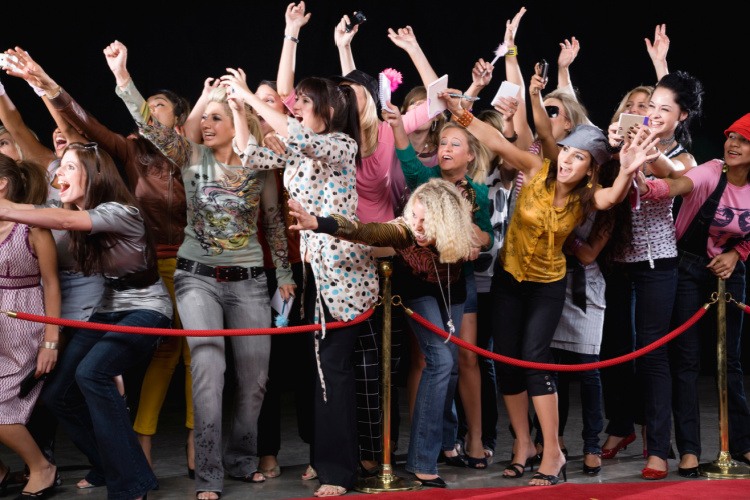
But discerning that one person who might have ill intent out of a large crowd of people is part of the job for a personal protection expert like Drew. While most of us are probably not celebrities, we’ve all seen over the past few years just how quickly a group of people can turn on someone who just happens to be wearing the wrong T-shirt or baseball cap.
What are the secrets of a professional bodyguard when it comes to sifting through the harmless folks and locating those who might have dangerous intentions? When Drew scans the crowds, he says what he looks for is different based on the audience and the setting.
This means that you have to determine what is “normal” behavior for wherever you happen to be. I wrote about this from the perspective of being less noticeable in my article, “Gray Is the New Black.” The term used for normal in various settings is called “baseline.” The book Left of Bang goes in-depth on the topic of noticing shifts in baseline.
Baseline will be different in different places. Are you in a place where everyone is really excited and cheering? The person who sticks out would be the one who is not animated, the person who looks serious or even angry. Are you in a hot, crowded place? If so, then why is that guy wearing a parka? If you are at a crowded event, these are the kinds of things you’re looking for.
Drew looks for people who are paying more attention to security than to the high-profile individual they’re protecting. Is there a person watching security, looking for exits, or looking for ways to get closer to a potential target? (Of course, the first two might just be your average prepper!.)
The point is, when you are in a crowd, pay attention to that which is different. This will vary according to location, general attitude, etc. If you are approached by an angry group, the study of mob behavior suggests that most people are acting as a group, not as individuals. Is there a person in the group who is behaving very differently?
That could very possibly be the most dangerous person in the room.
What are the verbal or written cues of impending violence?
A lot of folks in the Western world are blowing off steam right now. People are irate for a number of reasons and say things that they probably shouldn’t. Out of all that noise, how does a personal protection expert identify the verbal or written threats that are more likely to be carried out?
According to Drew, they look for two things: specificity and curiosity.
With regard to specificity, it’s one thing to say, “I’d like to punch that celebrity in the mouth because of the way he talks about this topic.” It’s an entirely different matter to say, “That celebrity goes for coffee and a bagel at John Doe’s Deli every morning and his security waits outside. I’m going to go in, get my own coffee, and wait for him to come in so I can punch him in the mouth.”
The first person is just talking while the second has done some research and has a plan. The more detailed the plan, whether spoken, written on social media, or noted somewhere on paper, the more likely the person is to actually carry it out.
Another indicator is when someone actually approaches security and starts asking questions about protocols. Most of the time it’s only curiosity, but this is a red flag for a professional bodyguard. They begin to ask their own questions to ascertain whether the discussion began out of genuine curiosity or if the person is actually a threat who is trying to find a weak point they can use to their advantage.
What are the secrets of a professional bodyguard when it comes to de-escalation?
The best way to handle violence is to avoid it altogether. (I heard echoes of Toby and Selco here: don’t be there!) When a potential threat catches the eye of a security team because of some of the reasons discussed above, the experts go talk to them. Not only does this give them a better feel for whether or not the person is really a threat, but it also gives the person a warning: “We see you, and we feel like you may be up to something.”
How can you use these bodyguard de-escalation tactics as just an average person? It’s easy. If you’ve noticed that someone is paying unusual attention to you, make eye contact. This is a non-aggressive way to let them know that you are aware of their attention. Years ago, when I was at an ATM in Mexico with a friend, I noticed that a couple of guys were sizing us up as she took money from the machine. I met their eyes, and suddenly they seemed far less interested when they saw a sneak attack wasn’t going to be possible. (Note: This can backfire if they take your eye contact as direct aggression.)
Another thing you can do only if you are in a safe environment with other people around is to speak to the person. Don’t try this alone in a dark alley in downtown Chicago. Make it casual, but let them know you aren’t there alone (even if you are). This lets them know you are aware of them. One thing potential attackers seek is the element of surprise. Often, if they lose that advantage, they may move on to easier targets. Keep in mind if you engage that your goal is not to be challenging or aggressive. You’re simply making it known that you are paying attention.
Do people planning attacks in public places give warnings?
Drew said that statistically, public attacks are nearly always preceded by a warning of some sort. He cited the following statistics from the National Threat Assessment Center:
- Nearly 100% of school shooters communicated about their intent to attack. (Page 54)
- 1/3-2/3 of school shooters had detailed plans ahead of their attack. (Page 54)
- In non-school mass attacks, 2/3 of attackers talked about their plans online. (Page 22)
What we can learn from this is that threats should be taken seriously. If someone you know is threatening you or somebody else, take note of the threat. Look at its specificity. Is the person performing research to attack more efficiently, whether they plan to attack a crowded place or an individual?
The statistics show that more people communicate about an imminent attack than those who quietly plan it and then enact it. The resources above are loaded with warning signs of which you should be aware.
Prevention is better than reaction.
Drew said that his best advice in these troubled times is that prevention is better than reaction. If you’re in a public space and you notice the signs that an angry group is gathering, leave. It doesn’t matter if you’ve paid for your meal or your ticket to an event. You will be safer by preventing the potential altercation altogether. From a professional protection standpoint, a credible threat is often reason enough to cancel an event.
You can often avoid problems by not being in places where violence is more likely. For example, don’t walk out to the parking garage in the middle of the night by yourself – go in a group. Avoid protests and demonstrations – one bad apple can turn a peaceful protest into a dangerous melee. Don’t go places where tensions are high if you can help it.
Of course, we can’t always avoid trouble. If you find yourself in a situation with a crowd, fighting back is nearly impossible, even if you’re armed. In fact, it will likely result in far more harm to you if you shoot one person in an irate group of twenty who are surrounding you.
You are better off trying to personalize yourself. It can be more difficult, even for someone swept up in mob mentality, to commit violence against someone’s mom, grandfather, or child. This isn’t a guarantee they won’t still attack you, but sometimes it can give you a possible way out.
Professional bodyguards take situational awareness to an entirely different level.
Situational awareness, a topic we’ve discussed regularly on this website, is an invaluable tool for keeping yourself safe, both by avoiding trouble and knowing what to do if trouble finds you. Be observant when you’re out. Note potential hiding places, both for yourself and for those who might have ill intent. Find the exits. Think through what you’d do if someone robbed the convenience store you’re in. Where could you hide your children safely? Is there a back exit through which you could escape? What can you weaponize to your advantage?
As Drew said, “Having a plan makes a difference.”
Attackers nearly always have a plan. So should you.
Do you find these tips from Drew to be helpful? Do you agree or disagree with his advice? Do you have other advice, or perhaps stories about being caught in a crowd that turned ugly? Let’s talk about it in the comments.






2 Responses
It really does boil down to paying attention, doesn’t it? Sadly, I still see so many people walking along with their hood up, earbuds in and completely engrossed in their phone.
They can’t hear what’s going on, they can’t see clearly, and their attention is completely captured by their phone. Some of these people would be such easy pickings.
Yep!
I live in a Western state, in a small town.
A real Wonder Bread ethnic profile town in a Wonder Bread state.
I was at our local Post Office last year and there were about 15 or so people in line. A couple darker complexioned (like a deep copper color skin, with dark brown eyes and black hair,) guys who were covered in tattoos which resembled South American gang tattoos were in line. The one in front of me had a little tear drop shaped one below his left eye.
I am an old lady, so I am not glued to a phone. There was an old man, also phoneless, who was just in front of this suspicious looking dude.
Neither of us stared AT the guy, but both of us kept him in our line of sight, and maintained alert, but neutral facial expressions.
The guy had his hands in his hoody pockets, but after a minute of being “noticed” in a non-confrontational way, he withdrew his hands from his pockets and placed both hands behind his neck and laced his fingers together. He kept them there until it was his turn.
Once the dude got up to the counter he mumbled something to the clerk about a passport, but our Post Office doesn’t process passports.
So the guy left kinda quick and joined his buddy out in the lobby and they left. Fast.
My point is, except for that one other old person and I, EVERYBODY else in line was staring at their #!@%&! phone!
Perhaps that dude with the teardrop under-eye tattoo was a good guy and had a legitimate interest in a passport.
I dunno.
Thank the Lord nothing happened and I didn’t have to find out the hard way that his intentions were not good.
PEOPLE!
Get off your phones in public places!
Are we NOW a nation of toddlers who need to be amused at all times?
Pay attention!
We are living in perilous times.