
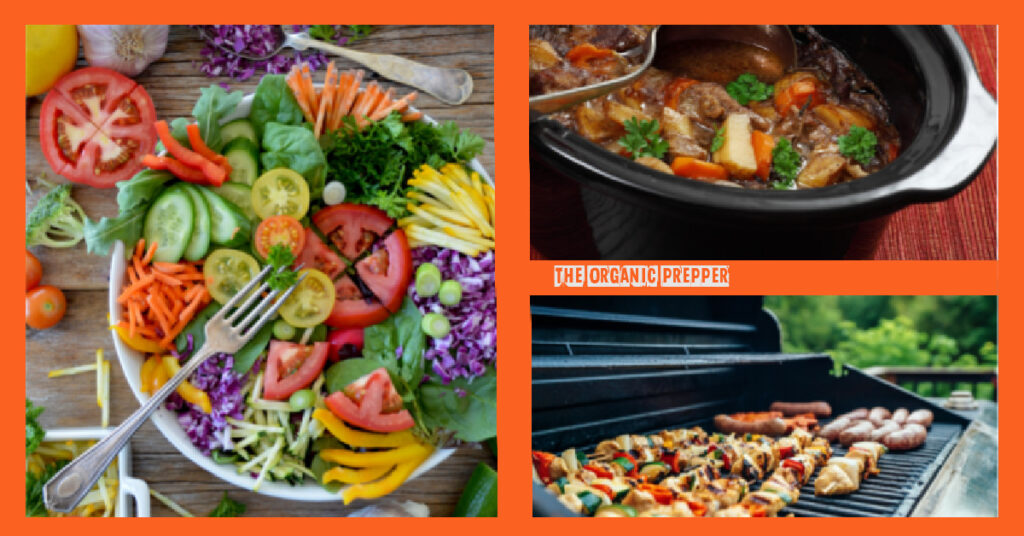
By the author of What to Eat When You’re Broke and Haven Hill
It’s midsummer and the mercury is rising! As the electrical power grid struggles to meet the high demands of central air conditioners battling the heatwave, these hot-weather cooking tips can help you keep your cool without cranking the air even higher.
Cooking is the activity that adds the most ambient heat to your home, followed by running a dryer. Your choice of cooking methods can greatly increase the temperature in your house, and then your air conditioner must work harder to overcome it. This can add a lot to your electric bill, and worse, if you have no air conditioner, choosing the wrong cooking method can make your home humid, muggy and miserable.
Hot Weather Cooking Tips
Now is the time to seek some different kitchen strategies. We can look back in history for a guideline, based on what our pioneer ancestors ate. Foods were lighter and required less cooking since nearly all cooking was done on a wood-burning stove that would have made the house unbearable. As well, many people set up summer kitchens, consisting of either a separate building to keep the main house cooler or an outdoor fireplace. We can take our cues from them and adapt their diets to our modern lifestyles.
- Change your eating habits with the thermometer. As the weather warms up, the harvest from your garden will increase. Most summer vegetables require little, if any, cooking, and can generally be quickly steamed to perfection on the stovetop. Look for easy, no-cook recipes and fast non-processed foods.
- Break out the kitchen gadgets. Instead of firing up the oven, or cooking something for hours on the stove top, pull out those dusty, seldom-used kitchen gadgets. Toaster ovens
, countertop grills
, and slow cookers
can all make meals without heating up the house. If I am going to be gone for the day, I often put something in the crock pot for a nice meal to welcome us home. The low heat of the crock pot will not affect the temperature in your home, and it’s a great way to tenderize a less expensive cut of meat, to which you can add some fresh veggie sides at dinner time. I like to put my slow cooker in my laundry room and shut the door to avoid adding any humidity in the summer. Skip the roasting and baking during the summer.
- Always make enough to have leftovers. Leftovers are a goldmine for speedy future meals. They generally require just a quick heat in the toaster oven or on the stovetop, and some foods are delicious when compiled into a cold salad or rolled up in a flatbread.
- Take it outside. Use a barbecue, a solar cooker
, or an outdoor fireplace to cook your meals in the summer, keeping all of the cooking heat outdoors. If you are grilling meat outdoors, make extra to add some quick protein to your salads. Here are more tips for cooking thrifty meals outdoors.
- Focus on local abundance. Even if you don’t have a garden, you can still have delicious local produce. Hit your farmer’s market and plan your menus around the seasonal goodness found there. Enjoy summer fruits and vegetables like berries, cucumbers, peaches, tomatoes, and much more! None of these requires much, if any, cooking time. Just wash and eat!
- Try different protein options. Consider delicious plant-based sources of protein. Beans picked fresh from the garden won’t require nearly as much cooking time as the dry ones sitting in your pantry. I don’t know how it started, but my family always chilled canned baked beans in the refrigerator before serving them, and to this day, I love a can of cold Bush’s Vegetarian Beans. If you prefer animal products, look for quick-cooking proteins like fish, chicken cut into small pieces, and eggs. Save large oven-baked roasts for winter fare, or at the least, use an alternative cooking method.
- Enjoy the health benefits of eating seasonally. Seasonal foods provide you with exactly what you need at different times of the year. For example, in the spring, those tender leafy sprigs like lettuce, kale, peas and pea shoots, and asparagus provide vitamins K and folate, which support blood health, bone health, and cell repair. The cool delicate foods are light, low in calories, and rejuvenating to the body as you gear up for the upcoming warm weather. Feasting on these waistline-friendly foods is a great way to get rid of that insulating layer of fat that you may have acquired during the winter.
- You’ll save money in more ways than one. Not only will your electric bill be reduced by adjusting your summer eating habits, but so will your grocery bill. Seasonal foods are less expensive by nature of their abundance at a given time. Farmers MUST sell them quickly, or they’ll spoil. So you can often purchase them in large quantities at rock-bottom prices. (Though I have discovered this really depends on your region. I’ve lived some places where the farmers’ market is much more expensive.) And if they come directly from your garden, it’s even better for your wallet!
What do you think?
Do you have any hot-weather cooking tips? Please share them in the comments.










2 Responses
You forgot the lifesaving air fryer and the instant pot! I am not as good as my kids are with cooking everything in the air fryer but while we had to keep our propane stove off until service last week & the AF came in handy in heating up leftover with minimal heat in the kitchen.
The instant pot is fantastic for soups, stews, chilis, etc. I am completely incompetent at using the outdoor grill but the George Forman grill makes a mean panini and pretty much most meats. I hate all the clutter of the gadgets in my cupboards but they can make life pretty dandy.
Be aware that some farmers markets permit their vendors to buy produce from commercial distributors, sometimes the same ones that sell to your grocery stores, to sell to customers at the farmers market.
You think you are supporting local farmers and are getting local produce, but you aren’t.
Good idea to know your farmer and rancher and egg provider.
Ask questions!
Also, check out how to cook using a “fire-less cooker” AKA hay box cooker.
Pioneers used them and for things like stews and baked beans, they work very well, but do require extra time.
Consider using a screened in porch to do some cooking in. Screened in to protect you from wasps and yellow jackets, with a roof over your head to keep those summer showers from delaying supper, and often with electricity available, it’s a nice alternative place to do your cooking.
You can even get one of those portable, covered roasters that were popular in the 1940’s and 50’s (yes, they still make them) and have roasted chicken or pot roast.
Those would work very well on a screened in porch!