
If you're new here, you may want to subscribe to my RSS feed. Thanks for visiting!
Author of How to Prep When You’re Broke and The Flat Broke Cookbook
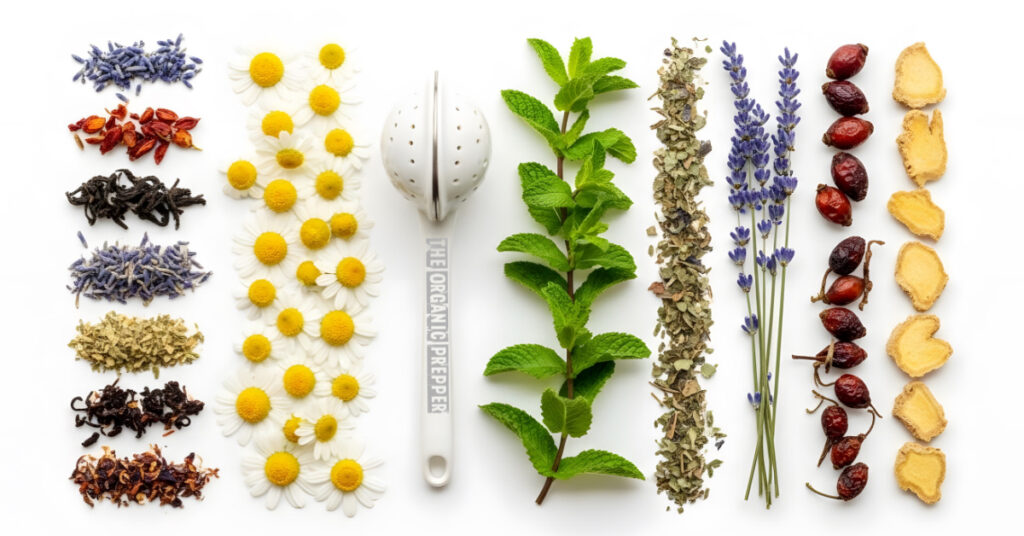
Do you enjoy a steaming cup of herbal tea? It’s one of the simple pleasures that I most enjoy. I like the entire ritual of it. Putting the water on to boil. Placing sweet local honey in a beautiful mug. Loading up my infuser with fragrant herbs. The sound my spoon makes when it rings against the mug, and I stir everything together.
I noticed the last time I was at the store that the price had gone up on herbal tea bags. (Of course, the price has gone up on just about everything.) Not that this is enough to make or break you, but tea bags ranged from 20 cents apiece to 40 cents apiece, depending upon the brand. What’s more, there have been recent reports about heavy metals and pesticides in teas, even organic ones, and the NIH has warned about microplastics risk caused by the bags.
There’s a far better and cheaper way to make herbal tea, my friends. Make your own! For a small investment up front, you can buy organic herbs by the pound on Amazon or at many different online retailers. I dehydrate the herbs I grow, as well as random citrus peels and other elements of herbal tea, for even thriftier ingredients. There are a few things I often grab in tincture format, especially if I don’t use them every day.
Then, all you need is a tea ball or an infusing mug(my favorite way), and you’re paying single-digit pennies per cup. What’s more, your blends are personalized and probably a lot higher quality than the ones you get at the store.
How do you use loose tea?
There are all sorts of ways to use loose tea. In fact, you can find entire websites dedicated to the art. I like to keep things simple, though, and also thrifty.
Subscribe to our newsletter
Trying to figure out how to stock up while prices keep climbing? We can help with our free guide and newsletter!
I own this mug with an infuser insert and lid. It’s not fancy, but it is my favorite color and it is one of the more reasonably priced options.
I also like these tea steepers. They’re a little bit bigger than those tea balls with the squeezy opening mechanism, and I find them far easier to fill.
Making tea this way is simple. Fill your tea strainer or infuser with about 2 tablespoons of loose herbs, then pop it into your mug. Add your honey if you’re using it. Boil your water and pour it over the infuser. Pop a lid on it (you can also use a saucer) and allow it to steep for 5-15 minutes. Remove the infuser or strainer, give it a stir, and enjoy your super-thrifty cup of herbal tea.
Below are some of my favorite blends.
These are just suggestions for blends. Make them your own according to your likes and dislikes (and what you have on hand). Play around with the ratios until it tastes right to you.
Get-‘Er-Done Tea
Got stuff to do, but your get-up-and-go got up and went? Try this get-‘er-done tea for a boost of herbal energy.
- Lemon Peel
- Orange Peel
- Ginseng
- Green Tea
Peace Tea
Have you had a stressful day? Are you feeling anxious? Do you need to wind down and chill out? Peace Tea is a blend containing calming herbs that may support relaxation.
- Lemon Balm
- Peppermint
- Chamomile
- Skullcap
Feel-Better Tea
Are you feeling under the weather? Depending on what ails you, this tea can help with its fragrant herbs and medicinal properties. I always make this when someone is suffering from a cold or flu. The slippery elm bark helps soothe a cough, and I prefer to use a few drops of this extract instead of the dried material. If you don’t have slippery elm, you’ll still find the tea beneficial.
- Peppermint
- Slippery Elm
- Chamomile
- Elderberry
- Orange Peel
- Hibiscus Flower
Tummy-Ache Tea
Looking to settle your stomach? This combination can help support digestion and calm an upset stomach. If you are vomiting or have heartburn, leave out the ginger. Slippery elm tincture is my go-to for heartburn.
- Peppermint
- Chamomile
- Ginger
- Slippery Elm
Sweet Dreams Tea
One of the most popular teas out there is Sleepytime Tea by Celestial Seasons. And for good reason – the ingredients are gentle and pleasant in taste. You can make your own version with these herbs.
- Chamomile
- Peppermint
- Lemon Verbena or Lemon Balm
- Passionflower
- Skullcap
- Hibiscus flower
Courage Tea
Nearly everyone has seen the movie Practical Magic, with Nicole Kidman and Sandra Bullock. But did you know that it’s based on a delightful four-book series by Alice Hoffman? These books will transport you to a quaint, charming home by the sea, where magic abounds, and whimsical lore is a part of everyday life. In the books, the Owens women make a drink called “courage tea” whenever someone needs a boost. Because my daughters and I love both the books and the movie, I concocted a tasty blend inspired by the tea that sustained generations of the fictional family. It’s really tasty, and perhaps it’ll make you feel braver.
- Ginger
- Lemon Peel
- Orange Peel
- Elderberry
- Red Roiboos
- Star Anise
- Black Pepper
Recommended ingredients for herbal tea blends
Here are some of the things that I always keep on hand for tea blends. Most herbs I get by the pound, but smaller packages are available. It would be a big expense to get everything at once. Start small and add to your tea-ingredient collection on a monthly basis. This summer, you can grow many of these herbs in pots on your patio or in your garden.
- Peppermint
- Chamomile
- Lemon and orange peel (I dehydrate my own from fruit I eat or use in cooking, and then zap it in the food processor)
- Hibiscus flower
- Elderberries
- Slippery Elm (dry or extract)
- Passionflower
- Skullcap (dry or tincture)
- Lemon Balm
PS: Homemade herbal tea blends and an infuser would make a lovely holiday gift basket that won’t cost much if you use bulk herbs you purchased for yourself anyway.
Do you make your own herbal tea blends?
What about you? If you are an herbal tea lover, do you make your own herbal tea blends, or do you buy the little bags? What are your favorite blends? Let’s talk tea in the comments.














2 Responses
Hi, Daisy. The part of slippery elm I’ve found beneficial is the inner bark, which when mixed with water has a satisfying, slightly sweet taste. Is that what you use?
I grow and dry many different herbs and flowers so Of course I make my own teas. I save all my citrus peels and air dry them separately. Some I keep in small chunks for making vinegar based cleaners and the rest I powder with a coffee grinder and keep in separate jars for cooking, baking, and teas.
I used to make 2 parts camomile, fresh 1/2 part Sage, and 1/8 part orange peel for my mother when she had a cold. She liked that mix, either in tea balls or in purchased empty tea bags. I made it up for her in big enough batches that 1 part was 1 cup. She always had purchased slippery elm lozenges to calm her coughing.
My current daily home made mix is 1 teaspoon dried Mullen leaf, 3 drops oil of oregano, 1 drop tea tree oil, 1/4 teaspoon powdered orange or tangerine peel, and 1 stevia leaf – in 12 oz of boiling water. Let steep a few minutes then sip. I’m drinking 2 or 3 of these large cups every day and my lungs are slowly getting better. Occasionally I add a teaspoon of raw honey that my son brings me from his bees.
I love many different wild plants as tea. Desert mallow, an 18 inch branch with flowers and leaves in 1 gallon of water- boil 15 minutes. Drink warm or cold, sweetened or not. Cold it is also a wonderful leave in hair rinse. Leaves hair manageable and shinny- but it’s also a pleasant tea. Two or three long slender plants of Cota boiled in 1 galling of water for 15 minutes is also a pleasant tea, hot or cold. Native folks here drink these two teas freely through the day or with meals. Many do sweeten them. It was also a way to have safer water because of the long boil time. Drinking water historically was often a slow seep or a rain pool on the desert.